We live in a time where reliability meets coolness, reliability, simplicity, and pricing. Cars from the 2000s offered us stuff that is not replicated in todays cars which have a different computer for each independent itinerary such as the AC or cruise control. There are tons of cars, such as the Toyota Corolla, Dodge Challenger and even the Lexus LS430 from the 2000s that are extremely attainable today. These cars in the yet-saturated car market can be attained for around $5,000 USD. With the first Lexus LS430s being 25 years old (wow I can register my car as a classic now!?) challenges will present themselves but 90% of the work is due to the person who owned the car before you. You will encounter two different ends of the spectrum, the good, and the bad, when buying an older used car:
Press photos for the 2001-2003 Lexus LS430
Press photos for the 2004-2006 Lexus LS430
The Ideal Seller is a Real Thing
The people who still care for it like it's their first born child. This is the best case scenario, you won't have to worry much about maintenance for the time being because it was previously taken care of. There are very obvious signs you can look out for to identify these people. Firstly, is it being garaged? If the car sat outside, it is likely that due to the age, the paint will naturally fade, and the dash will either form bubbles or crack due to heat collection in the cabin. Therefore a garaged car will present a smooth paint with little to no fade and the interior will be in excellent shape. Considering the service portion is complicated, the biggest green flag is if the owners present you with a plethora of recently done service records during the sale indicating what was done, when, and by who. Make sure basic maintenance items such as the oil, coolant, brakes, transmission have a service history and/or are in appropriate operating conditions. Carfax can also provide you with this but the owners keeping record shows a true dedication to their ride. Though people can fake this out, you can double check by starting up the car, driving it, and possibly conducting a fuse pull compression test by accessing the fuse box and pulling out the 30A fuse (LS430). Make sure you double check online if the car you're thinking of buying supports the capability to do this "fuse pull" compression test and what fuse to pull exactly. Once you get a proper feel of the vehicle, see the body of the car, is there rust present? (This can mean very expensive body work and future repairs), what are the date codes on the tires usually four numbers that are followed by the letters DOT, demonstrated in the image below, you typically want to keep your tires newer than 5 years old because rubber decomposes overtime.

Those are a the green flags you look for when purchasing a car from a private individual, though dealerships "guarantee" you the safety of the maintenance you always need to make sure you're buying a good vehicle that can actually get you from point A to point B reliably.
What you need to avoid
Avoid car flippers, which are commonly found on Facebook Marketplace or Craigslist. Car flippers are individuals who bought a car at a discounted price, sometimes disregarding the maintenance for the vehicle and listing the vehicle online for a premium price.
Avoid neglected vehicles, many owners think their old car that's been sitting in the garage since 1999 is worth $20,000 because it has 2,500 miles and its rust free, while this is good, cars do not like to sit at all. Even a few weeks of not driving your car can cause damage to your battery through parasitic drain, and can cause certain computers to drift out of sync.
Avoid younger owners. Coming from a Gen Z enthusiast, I've had my fun with my LS430, though I don't intend on selling it and gradually restore it to my liking, it wouldn't be convenient for the theoretical future owner of my car (sorry!). What I mean by this is that younger owners do tend to drive their cars more, and avoid key maintenance that isn't really known of. This applies to about 80% of younger owners.
Avoid rebuilt/ salvage titles. Unless you're experienced with collision, or don't intend on selling your car in the future. You can ignore this section. These types of vehicles tend to come with what I like to refer to as "opening a can of worms" in terms of car maintenance. You will end up dealing with bent frames, unfixable alignment (the car will be driving crooked), and the panel gaps on each body panel will probably be the size of the Grand Canyon in Arizona, of course unless professionally restored. My experience with salvage title cars wasn't the best, shout out to my uncle with his former Lexus IS-F in which you'd have to turn the steering wheel 90 degrees for it to go straight, not to mention the massive valley plate leak it had! Thankfully that car is long gone. These cars are also sold at nearly 30% off the regular KBB value of the car with a clean title.
Avoid any titles that seem sketchy such as the sellers name not being on it, or when they say "They are just selling for a friend." We know that this is a typical case of title floating. This occurs when someone buys a vehicle and sells it without registering it in their name first, leaving the buyer line on the title blank. This is illegal in all 50 states, as it helps sellers dodge sales tax and makes tracking ownership practically impossible. These are a few recommendations on what to look out for when buying an older used car.
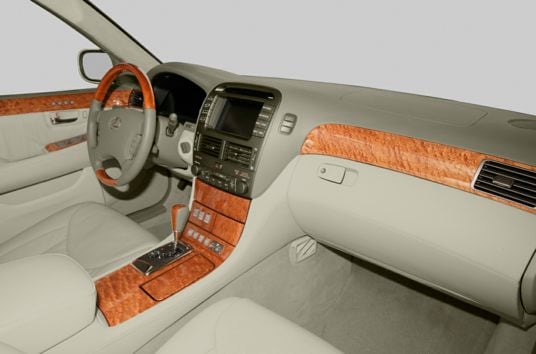
The 2001-2006 Lexus LS430 Interior
LS500 vs. LS430
The LS430 is considered one of the best used car buys in 2026. With the amount of car/ features, luxury you get in a sub $10,000 car is out of this planet, it even competes with modern cars today and it is greatly regarded amongst the Lexus community even better than it's younger sibling, the LS500.
The LS500 is a great car by today's standard, it keeps up with modern day competitors such as the BMW 7 series, Mercedes-Benz S-class, and the Audi A8. However comparing the LS500 to the LS430, it is a different ball game. The LS500 introduced a new 3.5 liter twin turbo V6, breaking away from the traditional V8s the LS400 through LS460 offered. The LS500 is packed with technology, a 12.3 inch display touchscreen, and 28-way adjustable seats, and multi-zone climate controls blows the aged LS430 but still the ergonomics, feel, and reliability remain unmatched on the LS430. These models are known to go on average 400,000 miles with no hesitation. What would you choose? a $90,000 LS500 or the ~$10,000 LS430, let us know in the comments!
The Heritage Edition Lexus LS500, marking the end of the Lexus LS series
1989-2026



Comments
Post a Comment